
The eCommerce market is not slowing down, but its nature is clearly changing. For many businesses, the main challenge is no longer simply launching online sales. It is becoming increasingly important to build a platform that can keep up with the business model, new sales channels, and technology that continues to evolve.
By 2027, being present in digital commerce will matter even more. Companies that postpone this area risk losing ground to competitors that are already investing in eCommerce, automation, B2B online, marketplaces, better UX, and data integration. Digital is no longer just an additional sales channel. It is becoming a core part of how a business operates.
The companies gaining an advantage will not necessarily be those adopting the largest number of new tools. The winners will be those with an architecture that makes it possible to add new features, channels, and integrations without rebuilding the entire system every few years.
A strong eCommerce roadmap should now cover more than the frontend, checkout, or another payment integration. It should also answer how the business will manage complexity across data, B2B processes, automation, user experience, and technical debt.
Below, we outline six areas worth considering when planning the future development of an eCommerce platform before 2027.
AI is no longer an add-on used only for content creation, chatbots, or product recommendations. It is increasingly becoming a layer that supports everyday sales processes, customer service, sales teams, and catalog management.
For eCommerce businesses, this primarily means getting their data in order. An AI agent will not be effective without access to up-to-date information about products, prices, availability, sales channels, and commercial terms.
In practice, there are three areas worth including in the roadmap:
Model Context Protocol (MCP) is one example of a standard that enables AI applications to communicate with business systems in a more structured way. Within the Sylius ecosystem, the MCP Server Plugin makes it possible to build scenarios based on communication between AI agents and the commerce platform.
This can include natural language product search, availability checks, cart creation, or support for sales teams handling complex customer requests.
Most importantly, AI should not be treated as a feature to address later. The platform should be ready to integrate with new interfaces and purchasing channels from the start.
B2B eCommerce is becoming less like a B2C store with hidden prices. Business customers expect access to individual commercial terms, fast ordering, support for multiple users within one organization, and negotiation processes available online.
This means that the platform must support not only the transaction itself, but also the business relationship behind it.
A modern B2B roadmap should include areas such as:
Sylius Plus offers modules that help reflect these processes in a way that is closer to real B2B eCommerce. B2B Suite, RBAC, and Request for Quote make it possible to build purchasing experiences for companies where an order does not always end with a standard checkout flow.
Elesto, a Sylius-based B2B distribution, is a useful reference point. It includes data covering more than 200,000 products and over one million variants, making it possible to test scenarios related to large catalogs, search, pricing, and order workflows.
In B2B, scaling is not only about handling more traffic. It is about handling more exceptions, relationships, and commercial terms without creating additional manual work for the team.
Many companies still face the same decision: one large, all-in-one system or a set of specialized services. In practice, more organizations are choosing a composable approach, where the eCommerce platform acts as a central part of the architecture while integrating with the best tools for specific business areas.
This may include separate systems for:
Headless commerce is part of this approach as it separates the frontend from the backend. Composable commerce goes further. It assumes that individual parts of the technology stack can be replaced, expanded, or developed without rebuilding the entire platform.
Sylius was built as a flexible eCommerce framework based on Symfony, supporting an API-first approach and integrations with external services. This allows teams to choose a frontend that fits a specific sales channel: a traditional storefront, a PWA, a mobile application, a B2B portal, or a marketplace solution.
For organizations developing a multi-vendor model, Marketplace Suite can also become an important part of the roadmap. The module supports core marketplace capabilities such as vendors, offers, order splitting, commissions, and settlements. Dafré, a ready-to-use starter kit for marketplace projects, was built on this foundation.
The greatest value of a composable approach is not modularity alone. It is the ability to introduce change gradually, in line with business priorities.
Modern UX is not about adding more visual effects. Its foundation is simplicity: finding products quickly, understanding the offer, feeling confident about pricing and delivery, and completing a purchase without friction.
Looking ahead to 2027, the following areas will be particularly important:
Checkout remains one of the most sensitive stages of the customer journey. Every additional step, unclear message, or missing preferred payment method can increase the risk of cart abandonment.
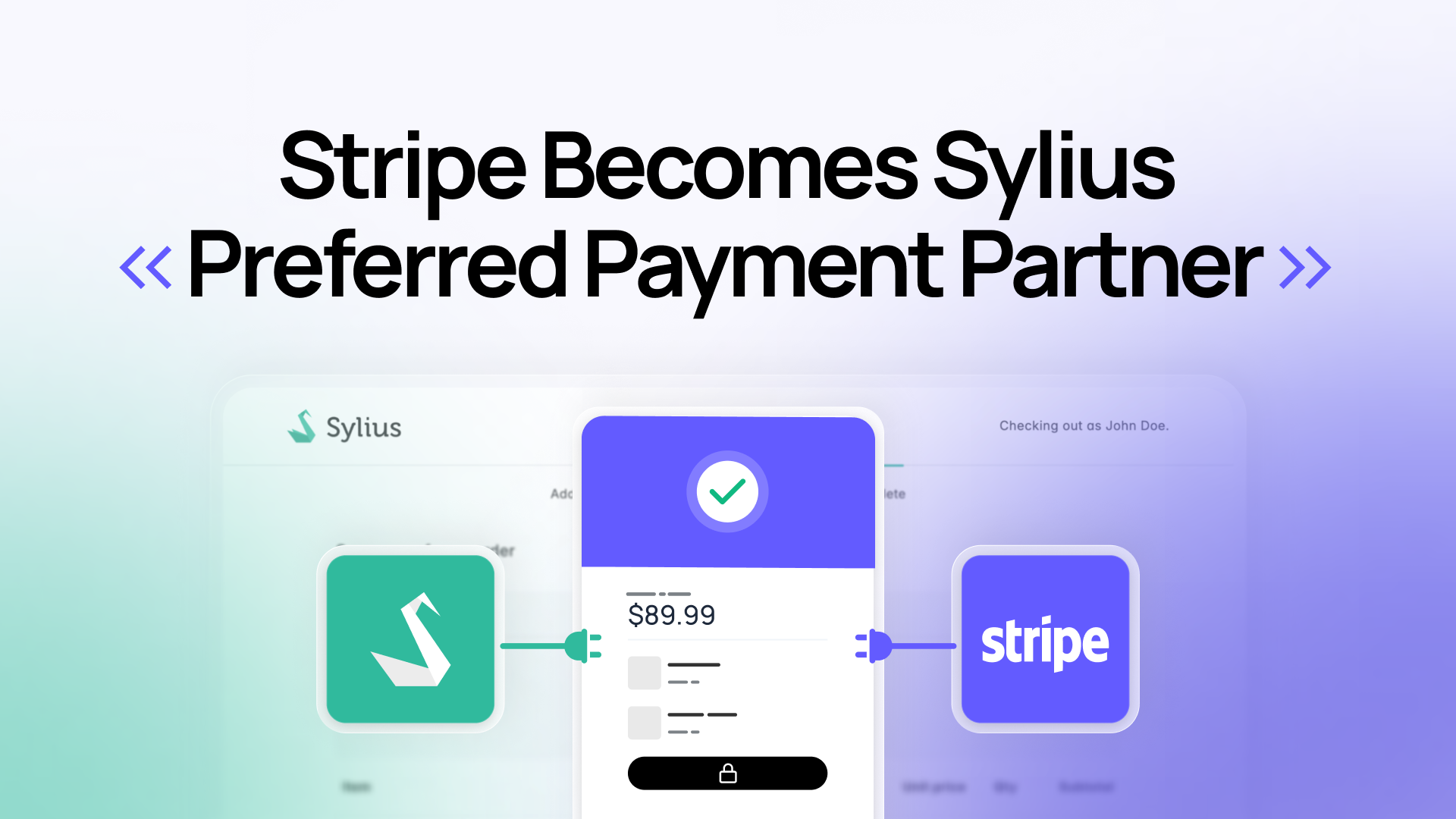
Sylius enables businesses to adapt the checkout flow to real customer needs, from the number of steps to the information displayed at each stage. It can also be extended with payment integrations available in the ecosystem, including Stripe, PayPal, Mollie, and Adyen, making it easier to offer payment options suited to different markets and purchasing habits.
It is worth remembering that checkout optimization is not a one-time project. It should be an ongoing process based on data, testing, and observation of real user behavior.
Rising customer acquisition costs are leading companies to focus more heavily on retention. However, this does not mean that every brand needs another points program or more discount codes.
A strong retention strategy should answer one question: why should the customer return to this particular brand?
The answer may include:
The Loyalty Module in Sylius Plus makes it possible to build loyalty programs based on points and exchange them for benefits such as discount codes. The module can become part of a broader retention ecosystem connected to CRM, marketing automation, and analytics tools.
For more advanced personalization, integrations with CDP platforms and systems using behavioral data can play an important role. One example is the Sylius and Synerise collaboration, used to build data-driven scenarios and personalize the shopping experience.
The best retention strategies are not based on price alone. They create value through a better fit between the offer, service, and communication.
A fast implementation does not always mean a good implementation. Many eCommerce platforms reach a point where each new feature becomes more difficult, slower, and more expensive to introduce.
This is usually the result of technical debt: outdated integrations, undocumented customizations, monolithic architecture, duplicated business logic, and a lack of testing.
Over the next few years, technology maintenance will become one of the main cost areas in eCommerce. This is why a roadmap should include not only new features, but also maintenance activities such as:
As a Symfony-based framework, Sylius gives teams a high degree of control over architecture and code. Its flexibility does not remove the responsibility for implementation quality. This is why strong engineering practices, automated testing, and a BDD approach are important. They help verify system behavior from a business perspective.
Sustainable eCommerce is not only about infrastructure or resource consumption. It is also about the ability to evolve the system without unnecessarily rebuilding it from scratch.
It is impossible to predict every change that will happen by 2027. However, organizations can prepare for the fact that change will become more frequent and customer expectations will continue to rise.
A mature eCommerce roadmap should bring together six areas:
Sylius can serve as a flexible foundation for this type of strategy. As an open-source solution extended through Sylius Plus, plugins, and partners, it allows teams to develop commerce in stages, based on actual business needs rather than the limitations of a closed, ready-made system.
Explore Sylius Plus, Elesto, and Dafré to see how these scenarios can work in practice.
An eCommerce roadmap for 2027 should go beyond frontend improvements or checkout optimization. It should include readiness for AI, advanced B2B workflows, composable and headless architecture, UX and checkout performance, retention strategy, data integration, and long-term technical debt control. The goal is to build a platform that can evolve with the business instead of requiring a full rebuild every few years.
Digital commerce is becoming a core part of how businesses operate, not just an additional sales channel. Companies that delay investment in eCommerce, automation, B2B online sales, marketplaces, UX, and data integration risk falling behind competitors that are already developing these areas.
AI can support eCommerce businesses in areas such as customer service, product search, catalog management, sales support, and purchasing assistance. However, AI only works effectively when it has access to structured, up-to-date data about products, prices, stock availability, channels, and commercial terms.
Sylius can serve as a flexible, open-source foundation for businesses that need a customizable eCommerce architecture. With Sylius Plus, plugins, and partner support, companies can develop their platform in stages and adapt it to real business needs instead of being limited by a closed, ready-made system.




 Sylius Plus