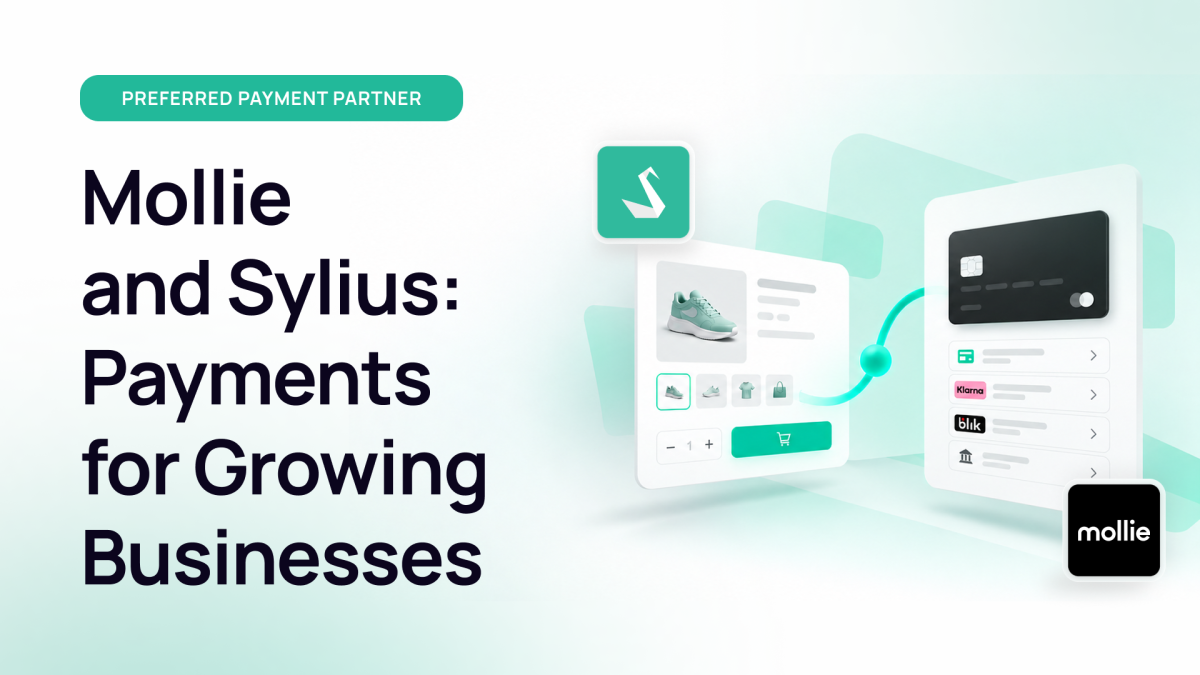
For a growing eCommerce business, payments are part of both the customer experience and the everyday work behind the store. Customers expect payment methods they already know, while internal teams need clear transaction records and a reliable way to manage payment issues. Developers, meanwhile, need an integration that can accommodate new requirements as the store grows.
Mollie has been part of the Sylius ecosystem since 2018. Today, our development team maintains the Mollie Plugin, which gives merchants access to local payment methods through Sylius.
Make the next European market feel familiar
Mollie gives merchants access to card payments and options such as Apple Pay and PayPal, alongside local payment methods. Through the Sylius integration, these include:
The exact methods offered depend on the account, customer market, currency, and configuration. Starting with those requirements helps merchants build a payment mix that fits their actual customers.
Through the integration, teams can configure how payment methods appear in the checkout, including their names, order, and country availability. This supports a more local experience as a business develops its storefronts.
As a store expands into new markets, its payment requirements may change. A business entering France, for example, may need to offer different payment methods than one focused on the Netherlands or Poland.
What is Wero and where is it available?
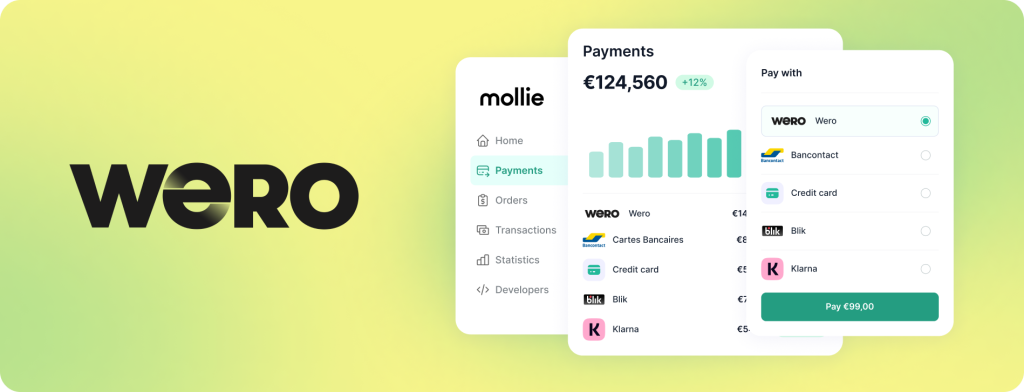
Wero is a European digital wallet from the European Payments Initiative (EPI), backed by European banks and payment service providers. It is built on instant account-to-account payments, so customers pay directly from their bank account and authorize the payment in their banking app or the Wero app. The wallet serves around 58 million users.
For merchants, Wero is a bank-based alternative to cards. According to Mollie, it avoids the interchange and scheme fees charged by networks such as Visa and Mastercard, and merchants get real-time confirmation and can fulfill the order immediately. For shoppers, the experience is close to iDEAL, which Wero is replacing in the Netherlands.
Wero has been live for person-to-person payments in Germany, France and Belgium since 2024. Online payments started in Germany in late 2025 and are rolling out in Belgium and France, with Luxembourg joining in September 2026. In the Netherlands, Dutch issuing banks are scheduled to connect in October 2026, and the move from iDEAL to Wero is due to finish by the end of 2027. In-store payments are still on the roadmap.
An integration with a clear owner
In 2025, Sylius officially took over maintenance of the Mollie Plugin. Our development team restructured the integration, updated its dependencies, and improved the codebase to support its continued development.
Agencies can use the official plugin as a maintained base for their projects instead of building the integration from scratch. This leaves more room to focus on the merchant’s specific checkout and payment requirements.
Using a maintained plugin means teams don’t have to develop the entire integration themselves. They still need to choose the right version, configure it, and test it against the store’s requirements.
Explore the Mollie Plugin on Addons Marketplace!
Payments need to work for the team, too
Payment processing involves more than completing a transaction. Teams also need to check payment statuses, handle refunds, and reconcile settlements with their financial records.
Mollie’s Dashboard brings payment information, reporting, and exports into one place. This gives teams a central view of the payment side of their business, alongside the order workflow in Sylius.
For a growing company, the same people may handle several of these tasks. Having payment information within reach can make it easier to investigate a customer question or prepare the data needed for financial operations.
The reporting setup should reflect how the business handles payments and accounting. A merchant with an internal finance team may need a different reporting process from one working with an external accountant. An agency should understand those needs alongside the checkout requirements when planning the implementation.
A partner that has grown with our community
Our work with Mollie goes back to 2018, when BitBag contributed to the first Sylius integration. In 2020, we announced a strategic technology partnership focused on Benelux, DACH, and France.
Mollie has also supported events organized by the Sylius community. They supported SyliusDays in Paris and several editions of SyliusCon, serving as Naming Sponsor in 2023 and returning as a Platinum Sponsor in 2025.
People from Mollie’s team have also joined conversations with developers and users of the integration, including on Sylius Slack. For anyone building a store, that’s an easy way to share feedback or ask a practical question about payments.
A partnership that also supports open-source development
Our collaboration with Mollie goes beyond maintaining the payment plugin. Revenue from PSP affiliate and revenue-share partnerships supports the continued development of Sylius Community Edition.
Sylius reinvests 100% of the revenue generated through these partnerships into Community Edition development. This funding helps support ongoing maintenance and improvements that benefit merchants, agencies and developers using the platform.
Choosing a payment provider is primarily a business decision, but partnerships can also help fund the open-source software behind an eCommerce store.
The next chapter: subscriptions with Mollie and Sylius
Recurring payments are integrated with Sylius through the Sylius Plus Subscription module, which is already connected with Mollie. The module manages subscriptions as part of the store’s product and order flow. Merchants can define recurring products and variants, combine them with one-time purchases, and create renewal orders. Adapting any custom billing rules is implementation work.
For a store already using the plugin’s subscription features, the move needs planning before an upgrade. The team should review existing subscriptions, renewal logic, payment setup, and custom code with Sylius. A new project offering subscription boxes, recurring deliveries, or memberships should likewise establish how Mollie payments fit its subscription workflow.
FAQ
The Sylius development team has maintained the official Mollie Plugin since 2025. Agencies can inspect its public code and adapt their projects around the integration.
Options include cards, Apple Pay, PayPal, iDEAL, Wero, Bancontact, BLIK, Przelewy24, EPS and TWINT. Availability depends on the merchant’s Mollie account, the customer’s market, currency, and each method’s eligibility.
Yes. In Sylius, a team can enable methods, translate their names, set their display order and restrict them by country. The store can then present local options that suit each market.
Yes. The plugin supports full and partial refunds, as well as payment status updates, captures, and cancellations. Mollie’s Dashboard provides transaction records, settlement information, and exports for finance work.
Mollie Plugin 3.x includes recurring and subscription payments. Sylius has announced that these built-in features will be removed in version 4; standard payments remain. Stores using subscriptions should plan a move to the separate Sylius Plus Subscription Module and review their payment and renewal logic before upgrading.
The maintained package is sylius/mollie-plugin. The older mollie/sylius-plugin repository is archived. Check dependencies, customizations, refunds, and recurring flows before changing versions.
The Sylius community Slack is a place to discuss implementation questions. Contact Mollie about account or service issues, and your agency or internal development team about custom checkout and order flows.
Sylius reinvests 100% of the revenue it receives from PSP affiliate and revenue-share partnerships into Community Edition development. Using Mollie through the official integration contributes to that funding.
 ElestoPreconfigured B2B setup for manufactures and wholesalers
 DafreBuilt in multi-vendor logic for marketplace models
 SolenneFor custom B2C commerce projects
 Sylius Community EditionDemo of the basic open-source version available after installation
 TourOverview of key features, architecture, and flows
 RoadmapCheck upcoming features and direction
 ServicesTechnical audits, upgrades, and expert support for implementations
 Sylius Plus