
April was a quieter month in the best possible way. With the Easter holidays in the mix, the pace was more relaxed, but the work kept moving. Core platform improvements, plugin updates, a PDF generation abstraction rolling out across multiple packages, and contributors from both inside and outside the team putting in steady, meaningful work. On the community side, Sylius showed up in Berlin and Warsaw, and there’s news about where SyliusCon is heading next.
April brought a steady round of refinements across Sylius and its ecosystem, with a strong focus on stability, better extensibility, and smoother day-to-day developer experience.
The core platform gained safer promotion handling with version locking for promotions and coupons, reducing the risk of conflicts during concurrent updates (#18921). Performance on large datasets also received attention by disabling order-by-identifier behavior by default, helping avoid costly sorting on bigger tables (#18962). On the API side, command classes used by API Platform resources can now be overridden through container parameters, making customization cleaner and less invasive (#18958). Several user-facing fixes landed as well, including improved payment flow behavior when a previously selected payment method becomes unavailable (#18965), restored email validation on cart updates (#18970), and better modal display in the Admin Panel (#18989).
PDF generation took a meaningful step forward across several plugins. Invoicing, Refund, and Wishlist plugins now support the new PDF generation abstraction as an opt-in, backward-compatible alternative to their legacy setups (InvoicingPlugin #426, RefundPlugin #493, WishlistPlugin #67). This gives projects a more flexible foundation for PDF-related workflows while keeping existing implementations safe.
Stripe-related packages received updates improving both compatibility and subscription support. The Stripe Plugin now retrieves additional expanded objects needed for subscription checkout flows, making downstream payment handling more reliable (#26). PayumStripeBundle also added Symfony 8 support, preparing the package for the next generation of Symfony-based applications (#10).
CMS content handling update is ready for release. Disabled products will no longer be shown in product grids and carousel elements, preventing broken storefront experiences when customers interact with unavailable items (#123).
The admin UI foundation continued to mature with visual and usability refinements. Accordion styling was improved to better align the Stack experience with the Sylius Admin interface (#367).
Developer tooling around grids was corrected by updating the generated skeleton to use the proper grid builder methods, making the make:grid workflow more reliable for new implementations (#477).
Altogether, April was about making Sylius more stable, more extensible, and easier to maintain across the core platform and surrounding plugins.
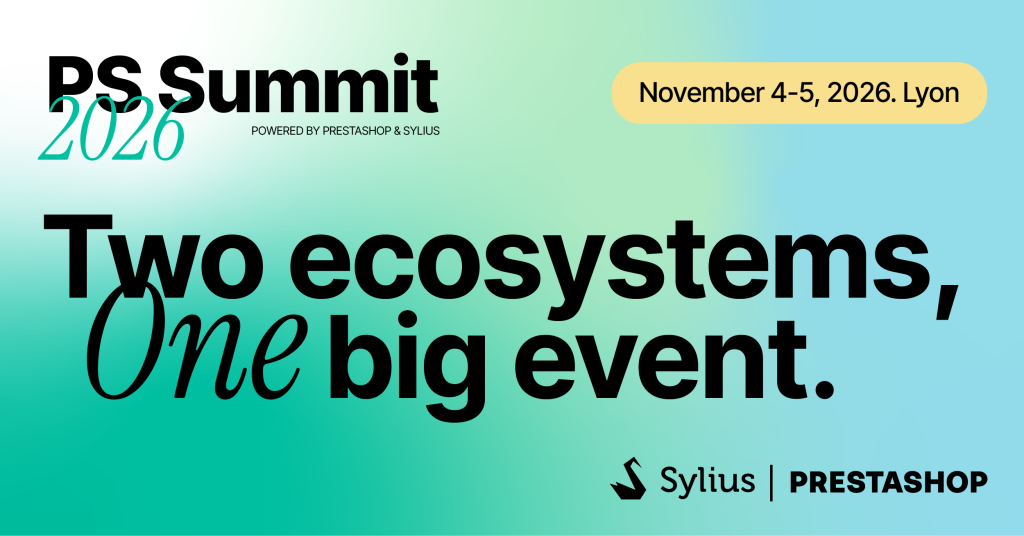
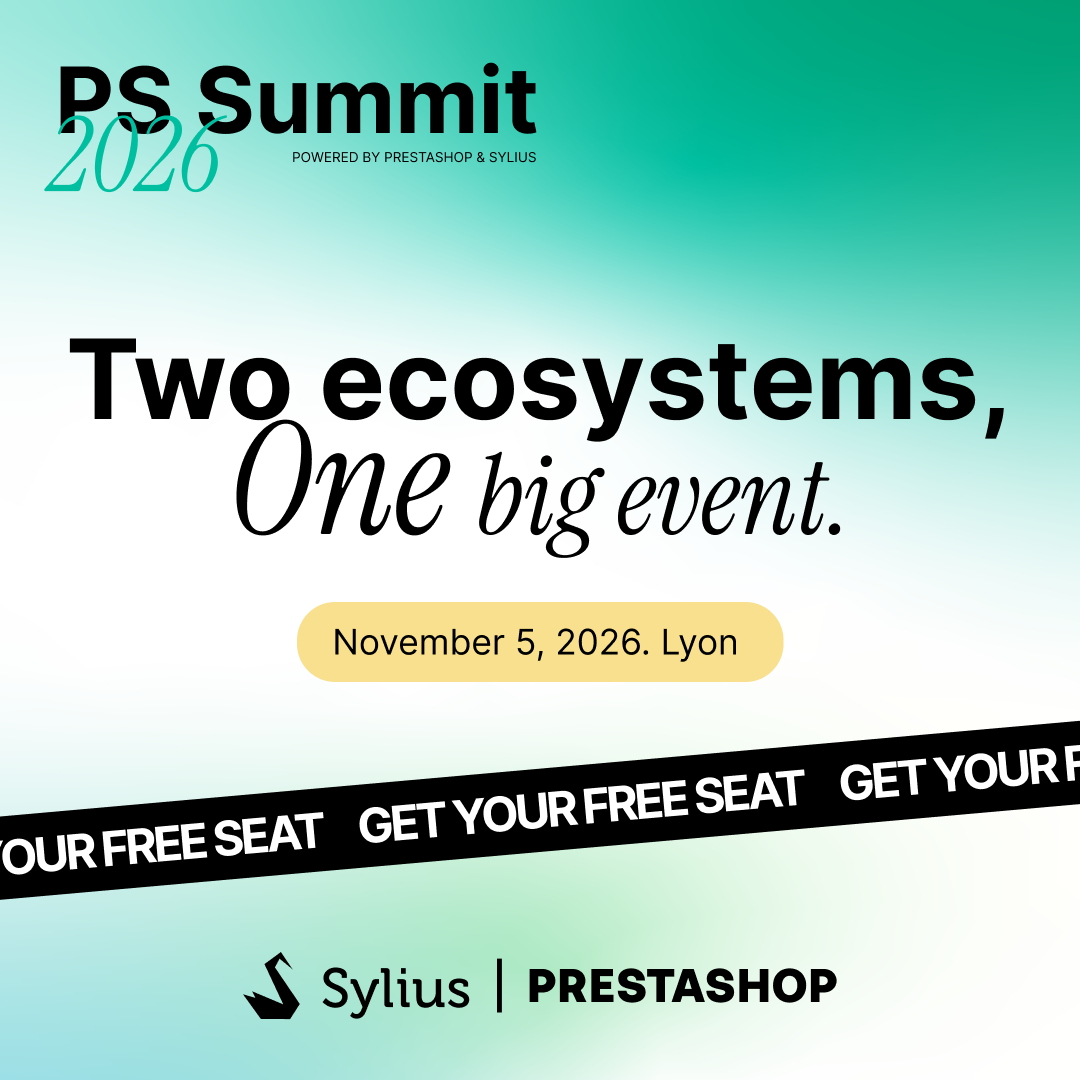
SyliusCon is evolving. Instead of running two separate conferences, Sylius and PrestaShop are creating one shared space for both open-source eCommerce communities. The result is PS Summit, taking place on November 4-5, 2026 in Lyon, France.
Both platforms share similar values around open source, developer-first architecture, and flexibility. Both communities face overlapping challenges in building modern commerce. Bringing them together creates more opportunities for cross-pollination, shared learning, and understanding how the two ecosystems can complement each other going forward.
The conference runs over two days. Day one focuses on workshops from both Sylius and PrestaShop, covering practical implementation topics and hands-on learning. Day two shifts to a classic conference format with technical and business talks from speakers across both communities. The call for papers launches in May – if you’re considering speaking, keep an eye on social media and Slack for details.
This year, tickets are free, with 500 spots available. The event takes place at the same venue that hosted SyliusCon last year, just in a different part of the building. Registration details will be shared through the newsletter first, so if you’re planning to attend, subscribe to it on the event’s website.
The Sylius Addons Marketplace continues growing as more vendors take ownership of their extensions. Over 500 plugins have been indexed from GitHub and the previous Sylius Store, and the ecosystem is consolidating in one place.
If you maintain an existing plugin that’s already been indexed, now’s the time to claim it. Claiming gives you control over your plugin’s profile, keeps information current, and ensures merchants and partners can find accurate details and contact information. If you’ve built something new that isn’t in the marketplace yet, the submission process is straightforward – prepare your repository, ensure proper configuration, and complete the profile.
Both paths are simple and take just a few steps. Clear ownership and up-to-date information directly impact how easily people discover and evaluate your extension. We’ve prepared guides walking through both the claiming and submission processes.
What’s more, Sylius Academy is now part of the marketplace. The learning platform brings together structured content, practical lessons, and certification – all in the official ecosystem hub. Currently, it includes more than 26 hours of video content and over 150 lessons designed to help understand how Sylius works in practice, not just theory. For agencies, development teams, and freelancers, it offers a structured way to build and validate Sylius expertise. Check it out at academy’s website. 🎓
Let’s summarize the latest events.
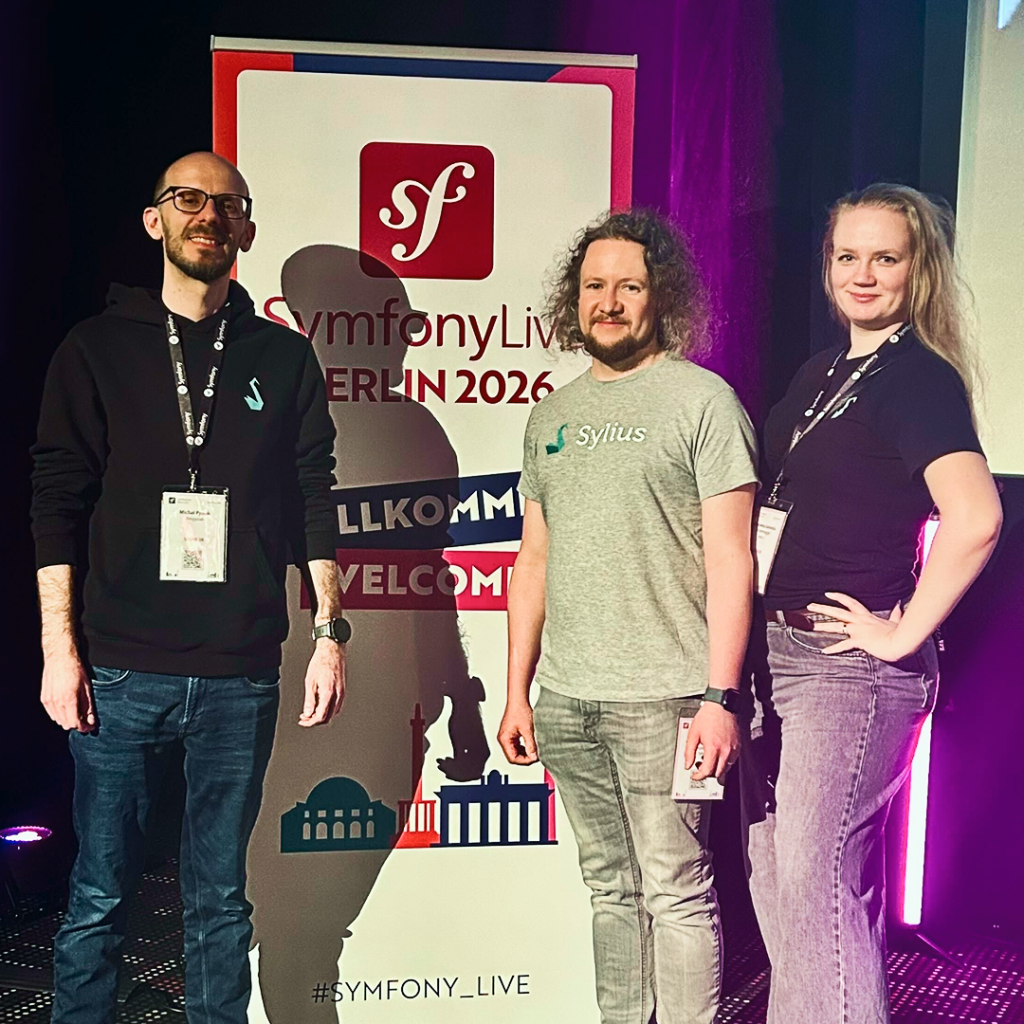
Magdalena Sadowska, our Head of Product Operations, spoke at SymfonyLive Berlin on April 23-24 with her talk “AI Culture in Open Source – The Sylius Way.” In a conference packed with hardcore technical sessions, she chose to talk about AI work hygiene and digital mental health – a bold topic shift that turned out to resonate deeply.
The talk addressed something most people feel but rarely name: the messy human side of working with AI tools. One slide in particular – “walk while agents run” – hit hard enough that the room went quiet. Afterward, people approached saying they recognized their own problems in the presentation and finally felt like someone had named what they were experiencing.
It’s a reminder that technical conferences don’t always need to be purely technical. Sometimes the most valuable conversations are about how we actually work, not just what we build. The response suggests there’s a real appetite for more of these discussions in developer spaces.
Thanks to everyone who made the event memorable, and huge shoutout to Magda for performing on stage – the Symfony community continues to be one of the most welcoming spaces in open source. 🦢♥️
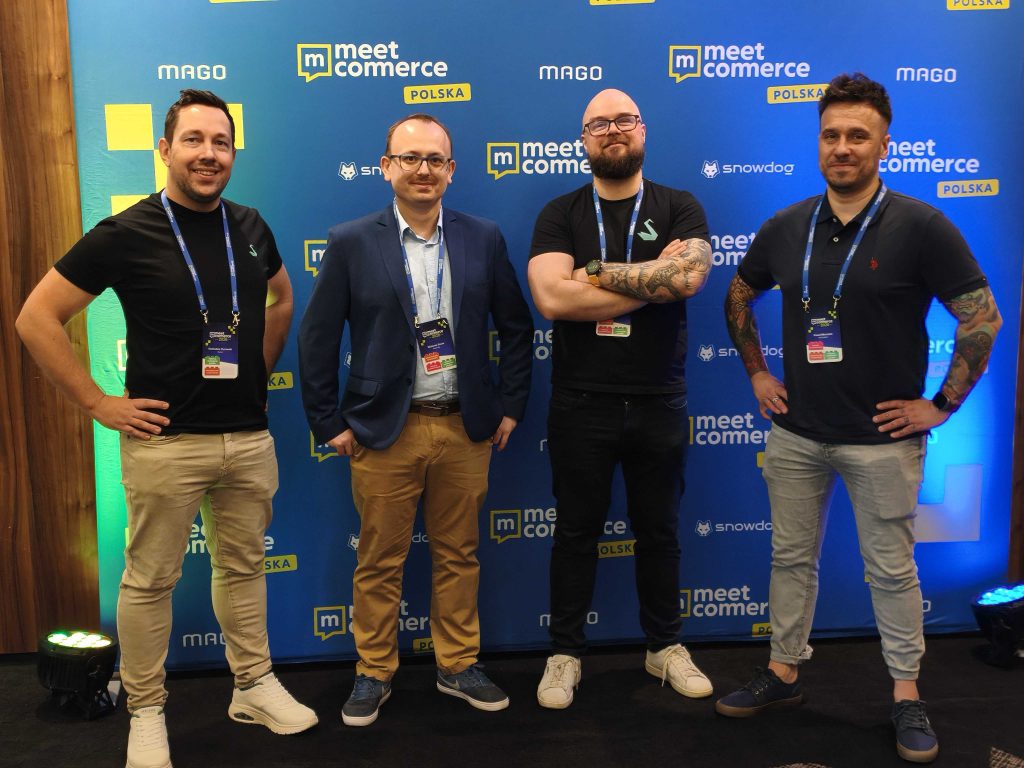
What’s more, Przemysław Połeć represented Sylius at Meet Commerce Poland in Warsaw on April 20. This marked the third consecutive year of Sylius’ participation at the conference, which has become one of the more substantive eCommerce events in Poland.
Przemek discussed the growing strength of Polish-built eCommerce software and emphasized how flexibility and scalability matter in B2B projects – where requirements are often more complex and less standardized than B2C. He also highlighted the value of the event itself: it creates space for exchanging experiences with other solution providers and having concrete, argument-based discussions with potential clients rather than generic sales conversations.
Events like this work when people discuss real problems instead of just trends. See you next year. 🇵🇱
bitExpert AG hosted another Sylius community meetup at their Mannheim office on April 30th, combining a daytime hackathon with an evening meetup. The event has become a regular meeting point for developers and partners working with Sylius in the region.
The speaker lineup covered a solid range of topics: Benjamin Eberlei from Tideways on performance monitoring and debugging, Sebastian Langer from Laioutr on headless platform integration, Thomas Lohner on how AI is impacting business models with real-world examples from ScaleCommerce, and Stephan Hochdörfer from bitExpert wrapping up with a demo of Sylius projects that push beyond standard eCommerce platform functionality.
27 attendees joined for a full day of learning and networking. By the sounds of it, the format worked well – and the team at bitExpert is already looking ahead to next year. If you missed it this time, keep an eye out. 🦢
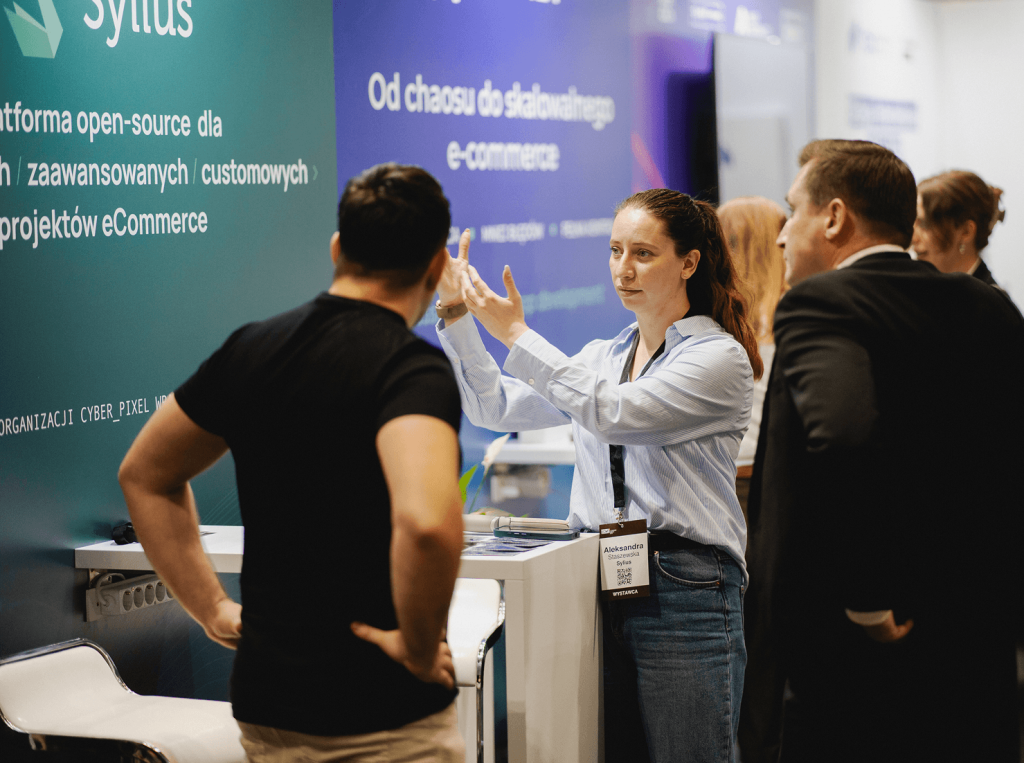
Last but not least, Sylius was part of E-commerce Warsaw Expo, and it was a genuinely good one. Plenty of valuable conversations around eCommerce projects, integrations, and platform development (the kind that are harder to have remotely.)
A special mention goes to the teams from PrestaShop and cyber_Folks, who shared the space and made the event that much more worthwhile. Events like this are a good reminder of how collaborative the eCommerce ecosystem can be when people actually get in the same room.
If you didn’t get a chance to connect during the event, feel free to reach out – the conversation doesn’t have to stop there. 🤝
Our friend Estelle Gaits from AKAWAKA will be speaking at Asynconf on June 27 in Paris La Défense. Her talk, “Introduction à la Sylius Stack: un nouvel admin bundle qui en a sous le capot!” will introduce the Sylius Stack and show what’s actually under the hood of the new admin bundle.
Asynconf brings together PHP and Symfony developers for practical, technically-focused sessions. If you’re in the Paris area and working with Sylius or curious about Stack’s architecture, it’s a good opportunity to see how the modular approach works in practice.
Tickets and details at the event’s website. 🇫🇷
Our Global Solution Partner BitBag recently released the second episode of BitBag eCommerce Talks, featuring Magdalena Sadowska – our Head of Product Operations. The conversation addresses a common B2B problem, such as projects starting from scratch, which take months to deliver value. Elesto changes that – you start with what already works (large catalogs, quick ordering, advanced pricing, corporate accounts, shopping lists, recurring orders) rather than building everything from zero. Magdalena explains how it was developed and how it shifts typical B2B timelines. The episode has already passed 1,000 views, for which we are really grateful. 🫶
BitBag’s Gildia Deweloperów (Developers Guild) also released a new episode with Marcin Kukliński diving into Sylius Stack – what it actually is, what components it includes, when it makes sense to use, and how to work with it in practice. Marcin demonstrates everything through a real application rather than just theory, making it easy to see how Stack works in actual projects. If you’re working with Sylius or considering it, this is one to watch.
Catch up with the newest Sylius-related articles from April. ⬇️
And here’s a bit of social media posts.
A productive April all around – both in code and in community. The ecosystem keeps moving forward through the kind of work that doesn’t always make headlines: careful fixes, better extensibility, and contributors who keep showing up. PS Summit is shaping up to be something genuinely interesting, and there’s plenty more to look forward to as the year moves on. See you next month. 🦢



 Sylius Plus