March focused on consolidating the ecosystem and strengthening infrastructure. The Sylius Addons Marketplace officially launched with over 500 indexed plugins, while Stack v0.12.0 introduced dark mode and better debugging tools. Two new B2B platforms went live – one automotive portal built in 10 weeks, one educational marketplace processing millions of orders annually. Events in the Netherlands and France kept conversations going, and the community released new valuable content.
Let’s dive into March! 🦢
March was a month of steady, high-impact improvements across the Sylius ecosystem – focused on stability, compatibility, and UX gains that make day-to-day work smoother.
Core development focused heavily on reliability and forward compatibility. A series of telemetry refinements was rolled out progressively across versions (#18908, #18914, #18920) to improve observability and help teams better understand system behavior in production. At the same time, Symfony 8 readiness continues with dependency cleanup (#18903), while removing legacy components like Gaufrette (#18880) simplifies the stack and reduces maintenance efforts. A number of targeted bug fixes enhance platform stability, including API behavior improvements (#18926), admin UI correctness (#18895), and build reliability after upstream changes (#18943). Together, these changes ensure smoother upgrades and more predictable production environments.
Sylius Stack, the modular foundation powering the modern admin experience and developer tooling continues to evolve with incremental UX and DX improvements. This month brings dark mode support (#353, #361), alongside enhancements to Twig hooks debugging (#357) and several fixes across templates and UI components (#356, #358). Together, these updates improve usability while keeping the customization layer stable and predictable.
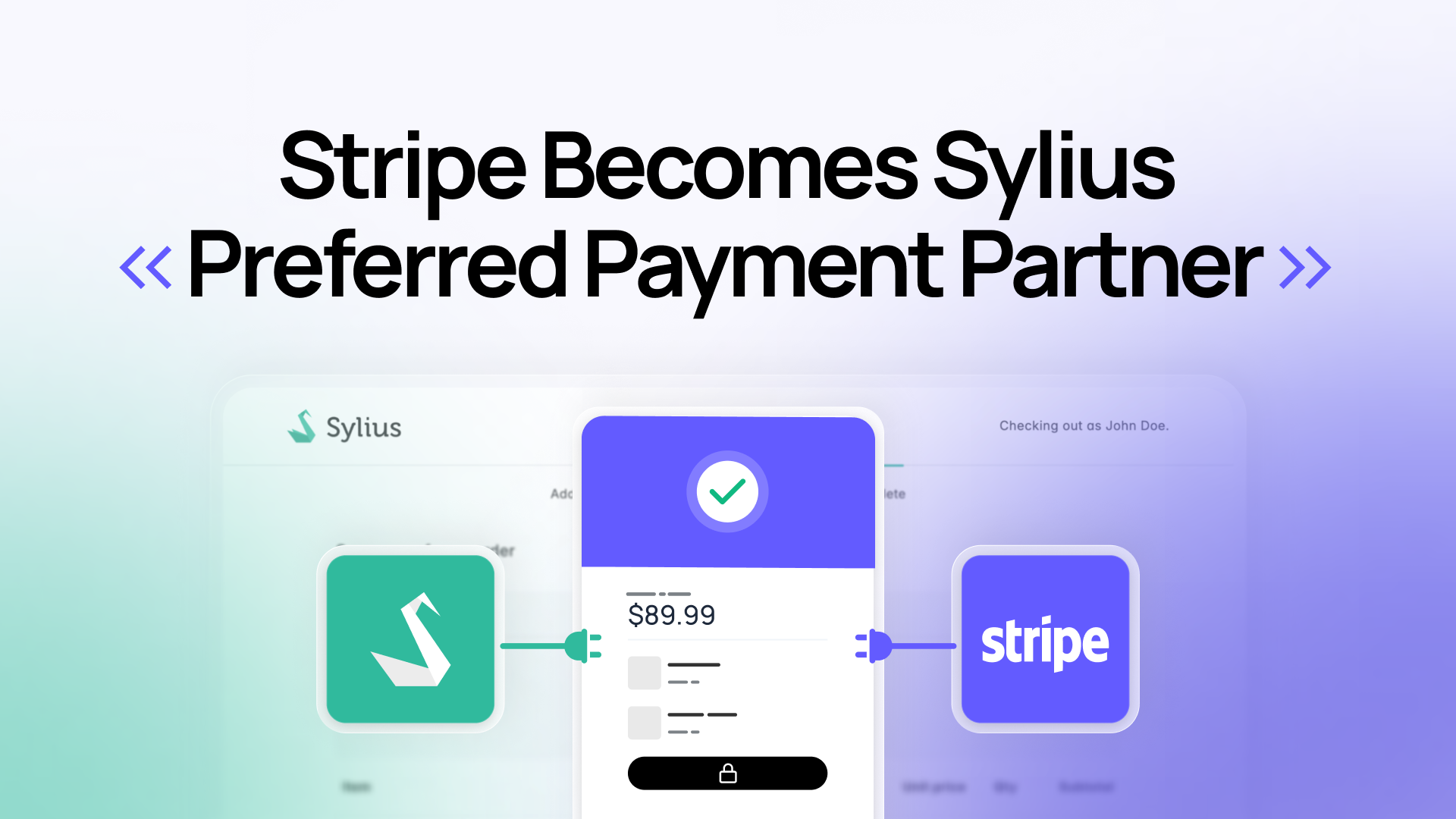
Payment capabilities were extended with support for the Swish gateway (#324), opening new market opportunities for merchants. Improvements to shipment notifications (#325) and internal version handling (#332) enhance operational reliability and integration accuracy.
Maintenance updates such as static analysis fixes (#424, #492) and streamlined build configurations (#425) ensure these plugins remain robust and aligned with the evolving core.
Improvements across content and wishlist functionality focused on API completeness and developer ergonomics. A CMS fix ensures content elements are properly exposed in API responses (#143), supporting headless use cases, while wishlist refactoring aligns command handling with existing patterns (#64), making integrations more consistent and predictable.
Under-the-hood improvements addressed ORM edge cases (#1154), preventing incorrect association handling and improving data integrity. Additionally, removing deprecated annotation support (#1155) helps modernize the stack and reduce long-term maintenance overhead.
Overall, March delivered meaningful progress across stability, developer experience, and extensibility – laying a stronger foundation for upcoming feature work while keeping the ecosystem production-ready.
Stack reached v0.12.0 in March, bringing several practical improvements to the developer experience. Dark mode support was added, making it easier to work in different environments. The sylius:debug:twig-hooks command now outputs a tree structure, improving visibility into hook hierarchies and making debugging more intuitive.
Bootstrap Admin UI received multiple fixes addressing edge cases around missing configuration and resources without IDs – the kind of issues that surface in real projects but don’t always make it into initial specifications. These improvements came from testing the components in production environments and addressing what actually breaks.
Thanks to everyone who contributed, especially loic425 – this release wouldn’t have happened without his work driving it forward and contributing multiple improvements directly to Stack. 👏
Sylius evolves continuously, with ongoing improvements across security, compatibility, performance, and developer experience. To benefit from that progress, your project needs to stay aligned with actively maintained versions of the platform.
Running on outdated Sylius versions or unsupported plugins increases risk over time, from missing security patches to growing technical debt and higher maintenance costs. Recent security fixes released for both Sylius 1.x and 2.x are a good reminder that staying current is not only a technical best practice, but also a business decision.
As part of our Maintenance or Support offering, we help you keep your project in good shape through ongoing guidance, technical reviews, and recommendations tailored to your setup.
At the final stage, we can also support you in upgrading to newer Sylius versions, helping you reduce risk, improve long-term stability, and prepare your store for further growth.
If you’re an agency looking for technical guidance on upgrades or maintenance planning, reach out to us for an audit. If you’re a merchant needing hands-on implementation support, we can connect you with experienced partners in your region.
This month saw a balanced mix of internal momentum and strong community involvement, with 52 merged PRs split almost evenly between internal and external contributors.
TheMilek – The driving force this month. Contributed extensively across core and plugins, with telemetry improvements (#18908) boosting observability and payment enhancements like Swish support (#324) expanding real-world merchant capabilities.
NoResponseMate focused on keeping the ecosystem healthy and maintainable, from removing legacy dependencies (#18880) to CI and static analysis improvements ensuring long-term stability and smoother upgrades.
Wojdylak delivered practical improvements to the WishlistPlugin, including refactoring command handling (#64) and improving consistency and developer experience.
mpysiak resolved a subtle but critical ORM issue in the ResourceBundle (#1154), strengthening data reliability.
camilleislasse introduced dark mode support (#353), significantly improving admin UX alongside several fixes and DX enhancements.
loic425 enhanced admin UI flexibility and robustness (#356) and contributed to modernizing the ResourceBundle (#1155).
rust-le delivered multiple stability improvements, including API fixes (#18926) and CI reliability updates (#18887).
marekrzytki improved compatibility and validation logic, notably around locale handling (#18935) and payments (#18941).
crydotsnake enhanced localization quality with improved German translations (#18932), supporting better international user experience.
The Sylius Addons Marketplace officially launched in March, bringing the ecosystem under one roof. Over 500 plugins have been indexed from GitHub and the previous Sylius Store, making it easier to discover available solutions, identify their maintainers, and connect merchants and agencies with the right vendors. The platform also allows creators to claim their plugins, enrich their profiles, and manage their listings directly. More about the launch is available in our blog post.
At the same time, Stephan Hochdörfer was recognized as the first plugin review author on the new marketplace, showing that the platform is not only a directory of extensions but also a place where ecosystem contributions can gain visibility and recognition. 🎊
The first community signals around the marketplace are already visible. Adeliom used the launch to showcase three open-source plugins they rely on in production: Easy CRUD, Happy CMS, and a TailwindCSS Theme.
Missed anything? Check out the recording below 🎬 or just visit the new store 🛍️
Check out the new projects that went live in March. ⬇️
KAVO Parts, a European automotive parts manufacturer operating in over 100 countries, went live with a new B2B ordering portal built by Creative CT. The challenge was straightforward: their existing e-catalog platform no longer met expectations, and they needed something that matched how automotive professionals actually work – using TecDoc vehicle IDs and part numbers, not license plates.
The platform integrates three external systems: TecDoc for vehicle compatibility (customers select a vehicle and immediately see which KAVO parts fit, with technical specs, OEM numbers, and product images), Microsoft Business Central for everything operational (customer-specific pricing, live inventory, delivery addresses, order sync, invoices, backorders), and Azure Blob Storage for customer-specific price lists via automated import. Beyond ordering, the customer portal provides full order history, backorder tracking, and invoice management with CSV/Excel export and direct PDF downloads. Built on Sylius 2 with Symfony 7, the platform supports 8 languages and went from first commit to production in 10 weeks.
Four months after launch, it’s processing daily orders from business customers worldwide.
Our Global Solution Partner BitBag delivered a new marketplace platform for Złoty Nauczyciel, Poland’s leading platform for teachers and educators to sell teaching materials, lesson resources, webinars, and training. The scale is significant: millions of orders per year, thousands of active authors, and tens of thousands of products, requiring stable architecture and carefully designed processes.
The project addressed building an advanced search system for educational materials, migrating customer and order data from the legacy platform, implementing automated vendor settlement and payouts, introducing one-page checkout, integrating with accounting systems, enabling deferred payment methods, and providing detailed reporting.
The new platform strengthened Złoty Nauczyciel’s position in Poland’s educational community while giving the business greater control over data, increased development flexibility, and the ability to introduce new features quickly.
It’s a good example of Sylius handling niche marketplaces that need deep customization rather than generic features.
👉 bitbag.io/case-studies/zloty-nauczyciel
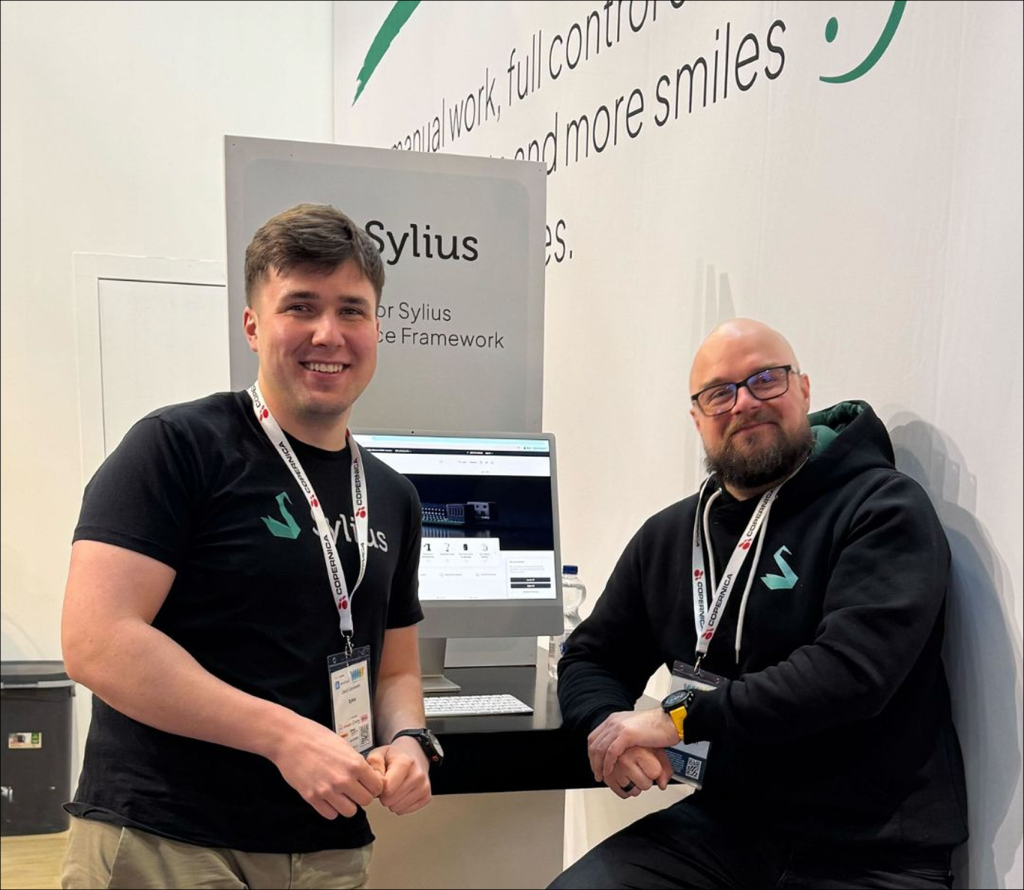
Przemysław Połeć and Jakub Leśniewski represented Sylius at Webwinkel Vakdagen in Utrecht on March 25-26. The event brought together the Dutch eCommerce community for discussions around open-source platforms, integrations, and current eCommerce challenges.
Thanks to Ergonode PIM for hosting us at their booth – it created a natural space for conversations with developers, partners, and merchants working on complex commerce setups. These events keep showing how interconnected the Sylius ecosystem has become across different markets, with people working on payments, PIM, frontend, and platform integrations all converging in the same space. Building eCommerce is rarely about a single tool – it’s about collaboration between platforms, plugins, and teams. Looking forward to 2027! 🇳🇱
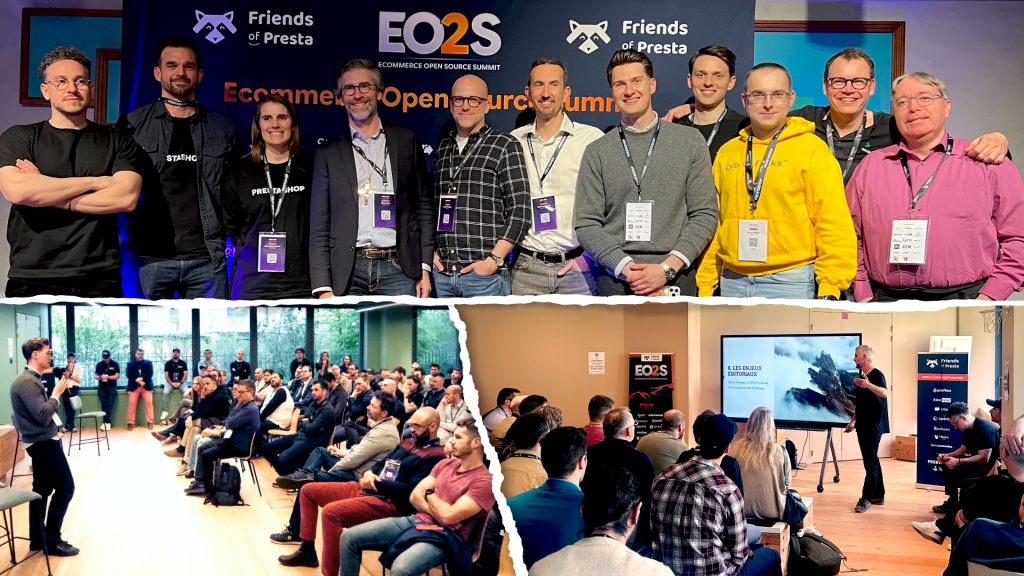
Our CEO, Mikołaj Król, attended the Ecommerce Open Source Summit 2026 in Paris on March 26 and discussed the future direction of both PrestaShop and Sylius following the recent acquisition. This marked the first public event where Sylius and cyber_Folks appeared together, setting the stage for future collaboration between both ecosystems.
What’s more, our friends and business partners Stephan Hochdörfer and Loïc Caillieux also represented Sylius at the event. Stephan’s talk on Sylius Stack components demonstrated how the modular approach helps developers build more efficiently, while Loïc shared 13 real-world insights about migrating to Sylius – covering preparation, risk anticipation, leveraging platform strengths, and executing successful migrations.
The event brought together perspectives from across the open-source eCommerce landscape, including PrestaShop community members. With both platforms now under one roof, these cross-community conversations are becoming increasingly relevant for understanding where open-source commerce is heading. The after-party featured a chef slicing meat live on stage – an unusual but memorable addition to the typical conference experience. 🇫🇷
We’re sponsoring Meet Commerce Poland in Warsaw on April 20, and Przemysław Połeć will be there representing Sylius. The event has established itself as one of the most substantive eCommerce conferences in Poland, bringing together high-level speakers for practical discussions around commerce, technology, and business strategy.
Last year’s edition delivered strong content across its talks and panel discussions – the kind of event where the quality of guests and topics actually matches the scale. If you’re attending, come say hi and chat about open-source commerce, platform decisions, or whatever’s on your mind. Looking forward to meeting you! 🇵🇱
We’re incredibly proud that our one and only Magdalena Sadowska, our Head of Product Operations, will be speaking at SymfonyLive Berlin on April 23-24 with her talk “AI Culture in Open Source – The Sylius Way.” The conference takes place at CineStar CUBIX right in the heart of Berlin at Alexanderplatz, bringing together around 500 Symfony developers from across Europe.
If you’re attending the conference, make sure to join her session. See you in Berlin! 🇩🇪 🦢
bitExpert AG is hosting another Sylius community meetup at their Mannheim office on April 30th! This has become a regular meeting point for developers and partners working with Sylius in the region. The event is supported by Mollie, Laioutr, and PHPUGMRN.
This year’s format combines a daytime hackathon (starting 10:00) with an evening meetup (starting 18:00). The lineup includes Benjamin Eberlei from Tideways on performance monitoring, Sebastian Langer from Laioutr on headless platform integration, Helge Wysoszynski from Mollie on payment integration and real use cases, Thomas Lohner on rethinking business models beyond “more AI,” and our friend Stephan Hochdörfer from bitExpert AG on practical examples and alternative approaches in Sylius projects.
If you’re in the area, it’s a great opportunity to connect with the German Sylius community. Registration is available via LinkedIn. See you there!
The Sylius community keeps producing technical content worth watching. BitBag, our Global Solution Partner, launched BitBag eCommerce Talks – a new podcast focused on the technology and decisions behind modern eCommerce platforms. The first series explores B2B commerce, where more companies are moving sales online and looking for solutions that support complex processes, integrations, and customer structures.
Episode 1 features Przemysław Połeć discussing why B2B companies are digitalizing their sales, what makes B2B implementations different from B2C, common mistakes when choosing technology and implementation partners, and key capabilities B2B platforms need. The podcast is designed for eCommerce leaders, IT teams, and companies developing B2B commerce. Listen on YouTube, Spotify, or Apple Podcasts. 🎙️
BitBag’s Gildia Deweloperów (Developers Guild) also released a new episode featuring Karol Wojdyła, a core Sylius developer, walking through TestApplication – one of the newest additions to the Sylius ecosystem. The episode covers what TestApplication actually is, when it makes sense to use it in your projects, and how to get started with it in practice. Karol also provides context around the new Sylius Addons Marketplace. If you’re working with Sylius or considering it, this delivers concrete technical knowledge you can apply directly.
What’s more, Mikołaj Król and Olivier Binet recently hosted a livestream discussing PrestaShop’s future following the recent ownership changes. The session covered where the platform is heading, how the product roadmap may evolve, what this means for merchants, partners, and developers, and the role of open source going forward. PrestaShop is entering a new phase, and the conversation addressed what that means for both ecosystems.
Commerce Weavers has also been consistently publishing technical guides and tutorials on their YouTube channel. Their content covers practical implementation details, Stack components, and real-world development patterns – the kind of material that helps when you’re actually building something. Worth subscribing if you’re working with Sylius regularly.
Some articles from the ecosystem worth your time. 🖊️
Let’s not forget about social media discussions and insights from March.
The Addons Marketplace is live, infrastructure work continues, and the community keeps building. March showed progress across multiple fronts – from new stores going live to cross-platform conversations at events.
Thanks to everyone involved. See you in April! 🦢




 Sylius Plus