

The expansion of digital education has created space for platforms that connect knowledge creators with a broader audience. Złoty Nauczyciel is one of the leading examples of this model in Poland. Designed for teachers and educators, it enables the sale of teaching materials, webinars, and training programs, while also supporting a professional community built around shared experience and daily practice.
As the platform grew, its original technology stack started to limit further development. The need for flexibility, scalability, and better alignment with the marketplace model led to a decision to rebuild the system using Sylius and its enterprise extension, Sylius Plus. The implementation was delivered by BitBag.
Sylius is an open-source eCommerce framework used to build custom commerce applications. Sylius Plus extends it with enterprise modules, including marketplace functionality.
Złoty Nauczyciel is a multi-vendor educational marketplace that allows teachers and educators to sell digital products such as lesson materials, webinars, and training programs, while also building a professional community.
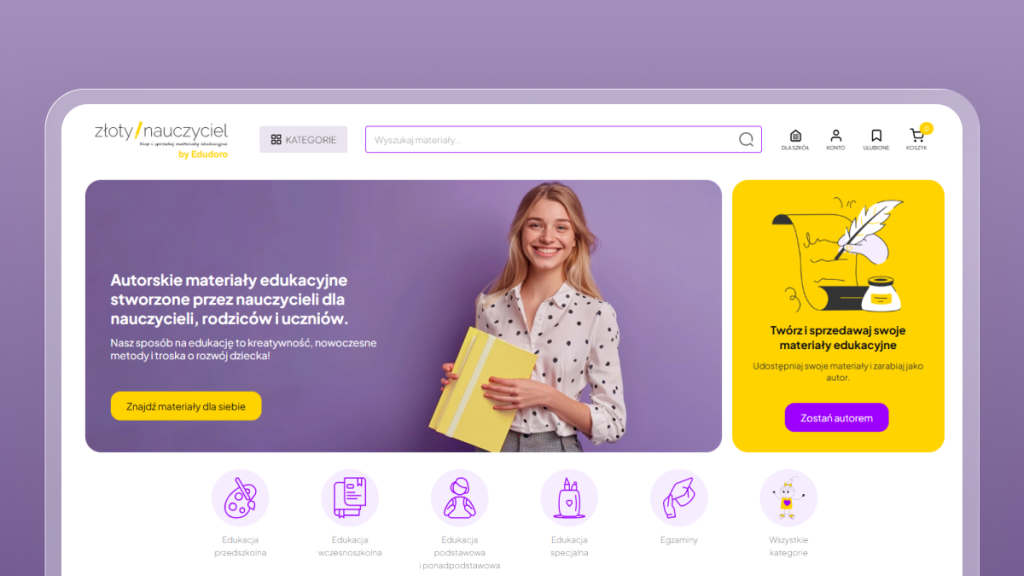
Złoty Nauczyciel is not a typical eCommerce platform. It operates as a multi-vendor marketplace where each educator can publish and manage their own content. At the same time, the platform needs to maintain consistency, quality, and control over the entire ecosystem.
Sylius provided the flexibility required to support this model. Instead of adapting business logic to fit a rigid system, the platform could be designed around real user needs. The Sylius Plus Marketplace module served as a foundation, enabling vendor management and multi-store logic, while leaving space for custom extensions.
A key aspect of the project was understanding how educators interact with content. This influenced both the structure of product pages and the way vendor profiles were designed. Each author has a dedicated space that not only presents their materials but also builds credibility through reviews, descriptions, and access to their full catalog.
One of the most complex parts of the implementation was the migration from a WordPress-based system to Sylius. The scale of data was significant, including millions of orders, thousands of vendors, and a large catalog of products.
The migration process had to ensure continuity for both users and search engines. Existing URLs were redirected, and data integrity was preserved across orders, customer accounts, and product structures. This allowed the platform to transition without losing its existing visibility or community base.
At the same time, the new architecture introduced a much stronger foundation for future growth. Performance optimization and data handling were designed to support increasing traffic and the ongoing expansion of the marketplace.

Unlike standard online stores, Złoty Nauczyciel required advanced financial and operational logic. One of the central elements was the vendor settlement system. The platform automatically calculates payouts based on sales, including cost structures and reporting. This process, handled periodically, reduces manual work and provides transparency for both the platform owner and vendors.
Sylius made it possible to build this logic on top of its existing order and payment systems. Instead of replacing core mechanisms, the team extended them with custom functionality that reflects the marketplace model.
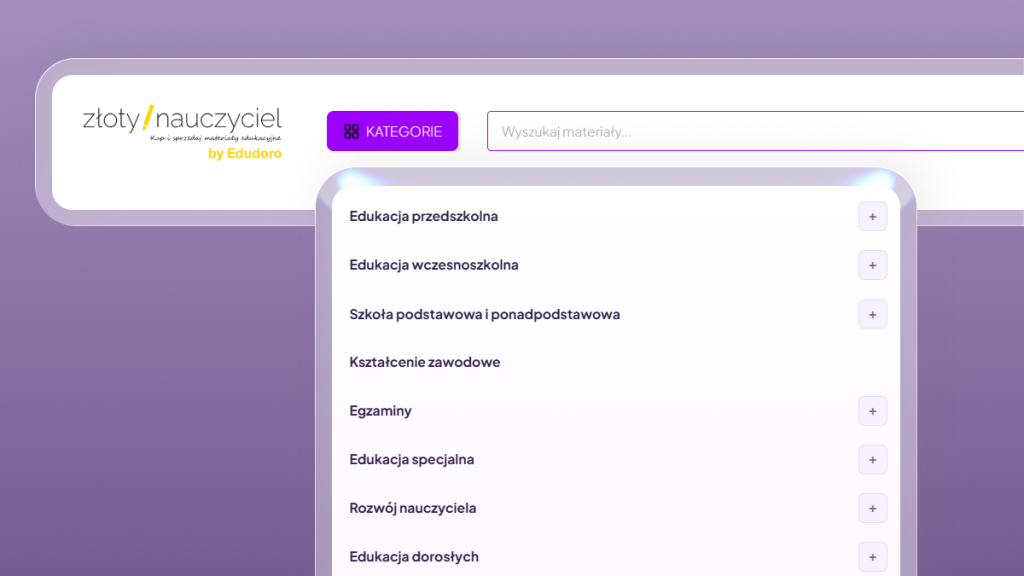
Another important area was product discovery. With a large and diverse catalog, users needed efficient ways to find relevant materials. Advanced filtering and search mechanisms were introduced to improve navigation and ensure that users can quickly access content tailored to their needs.
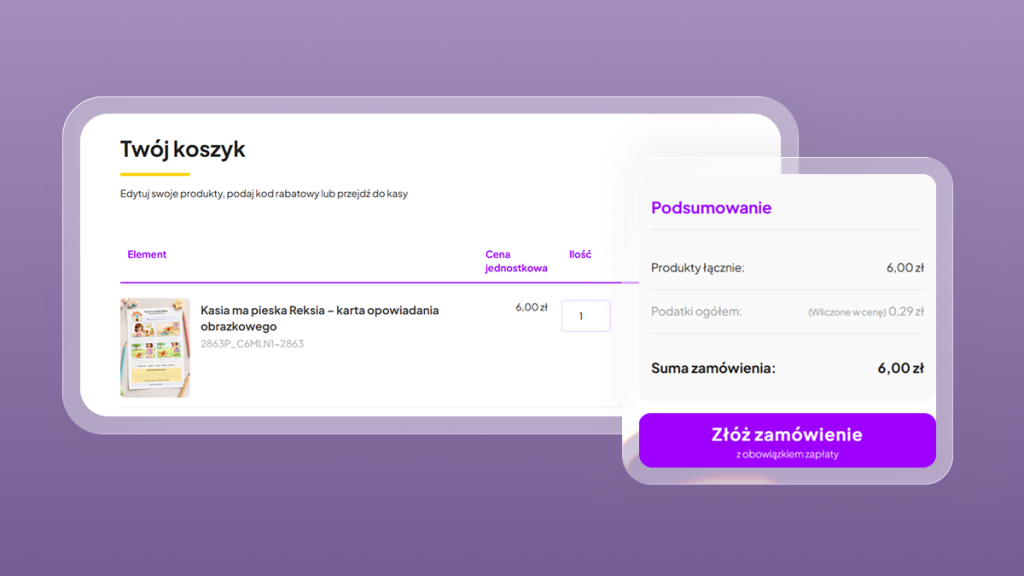
The checkout process was redesigned to simplify purchasing decisions. A one-page checkout reduced friction, while deferred payment options added flexibility for users.
These changes were implemented within the Sylius checkout flow, maintaining consistency with the platform’s architecture while improving usability. This approach ensures that further enhancements can be introduced without reworking the entire system.
To support operational efficiency, the platform was integrated with external systems such as invoicing tools. This enables automatic invoice generation and reduces the need for manual intervention in financial processes.
For administrators, additional reporting capabilities were introduced. These include detailed insights into orders, settlements, and payments, providing better visibility into platform performance and vendor activity.
The result of the collaboration between Złoty Nauczyciel and BitBag is a marketplace that combines flexibility with structure. The platform supports both individual educators and the broader community, offering tools that scale with its growth.
From a business perspective, the new system enables better management of vendors, improved user experience, and more efficient operations. From a technical perspective, it provides a stable and extensible foundation for future development.
This case highlights how Sylius can be used to build platforms that go beyond traditional eCommerce. Its modular architecture allows teams to implement complex business models, such as educational marketplaces, without compromising on performance or maintainability.
For companies working with multi-vendor systems, custom financial logic, or community-driven platforms, Sylius offers a way to design solutions that match real-world requirements.
| Area | Standard platform | Sylius |
| Custom logic | Limited | Fully customizable |
| Marketplace support | Often plugin-based | Native via Sylius Plus |
| Scalability | Depends on vendor | Designed for extension |
| Control over data | Limited | Full Control |
Summary: Sylius allows building the platform around the business model, not the other way around.
If you are planning a marketplace or a custom eCommerce platform, Sylius provides a flexible starting point that can evolve with your business.
Złoty Nauczyciel shows how Sylius can be used beyond standard eCommerce. The platform combines marketplace functionality, community features, and custom business logic in a single system.
The successful migration to Sylius was delivered by BitBag as the implementation partner, ensuring a smooth transition from the previous platform while preserving data integrity, SEO visibility, and user continuity.
Instead of adapting the business to the platform, Sylius allows building the platform around the business.
Sylius is used to build custom eCommerce platforms, including marketplaces, B2B systems, and complex commerce applications.
Yes. With Sylius Plus Marketplace Suite, it supports multi-vendor platforms with custom extensions.
Yes. In this case, it supported migration of millions of orders and large product catalogs.
It can be implemented as custom logic on top of orders and payments, allowing automated payouts and reporting.
It depends on the use case. Sylius offers more flexibility and control, while SaaS platforms offer faster initial setup.




 Sylius Plus


