As you probably heard, December brought big news for the Sylius community and the European open-source ecosystem. Beyond the big announcement, the community continued growing with new projects launching, new partners, and crossing the 10k live stores mark.
Psst: We’ve just released our Sylius 2025 summary, too! Don’t hesitate to check it out and tune in for the livestream on January 22nd. 🎥
December wrapped up with a solid batch of “make it smoother, faster, and easier to maintain” improvements across core, bundles, and plugins – plus the very first step toward Telemetry.
On the admin side, autocomplete performance got a meaningful boost by removing a configuration that could trigger loading far more entities than needed, especially noticeable on large catalogs (#18629). We also improved day-to-day management UX with clearer, more resilient form theming in the admin (#18641) and a visual distinction for disabled taxons in the taxonomy tree (#18611). On the stability and forward-compatibility front, CI got faster and more reliable thanks to splitting Chromedriver tests into parallel jobs (#18603), and Symfony support was extended to include newer 7.4 versions while staying compatible with 6.4 (#18594). Finally, shop API naming was made more consistent for PaymentRequest operations (with clear upgrade notes) (#18568), and Polish translations received a broad refresh across the UI (#18593). We’ve also introduced anonymous, privacy-safe telemetry to help the whole community understand how Sylius is used in real-world projects. We’ll keep the spotlight light for now, but you can follow the rationale and design in the RFC issue (RFC #18588).
A big step forward in maintainability: the bundle is moving away from legacy tooling by removing PHPSpec and modernizing the test stack (#1113). Routing path generation was also aligned more closely with Symfony conventions (reducing reliance on older, less-maintained helpers) (#1108).
Grid development got more future-proof with Symfony 8 support landing in the bundle (#462), helping teams adopt the latest Symfony versions without waiting on the ecosystem.
CI coverage was extended to include PHP 8.4 and 8.5, improving confidence for early adopters and keeping the bundle aligned with upcoming PHP versions (#141).
The Standard edition kept pace with the platform: it now targets Sylius ^2.2 (#1211) and tightens Symfony requirements to Symfony 7.4 for a clearer, more consistent baseline (#1210).
A practical fix with real business impact: partial refunds triggered from the admin panel are now properly sent to Mollie, preventing reconciliation headaches and manual workarounds (#298).
The PayPal payouts downloader was corrected to use the right SFTP implementation, restoring report downloads that could previously fail due to a class mismatch (#414).
CI maintenance continues to get smoother: the plugin switched its build workflow to the shared BuildTestAppAction, making builds easier to maintain and more consistent across Sylius plugins (#416).
The Refund plugin followed the same path, adopting BuildTestAppAction in CI for simpler workflows and fewer moving parts to keep updated (#481).
The TestApplication was aligned with the current platform direction by locking to Sylius 2.2, making it a more predictable baseline for testing and development (#43).
All in all, December was about tightening the core experience (performance + admin UX), keeping the ecosystem healthy (CI and compatibility work), and setting foundations for what’s next.
Our Professional Solution Partner, bitExpert AG, released a Base Price plugin for Sylius that helps merchants comply with EU pricing regulations while improving transparency for customers. In many European markets, shops must display unit prices (like price per 100g or per liter) alongside the selling price – especially for food, beverages, and household products.
The plugin simplifies this requirement by automating base price calculations and display. Merchants can create custom unit groups and units, set up base price rules, and let the system handle the rest. This reduces manual work for teams managing large catalogs while ensuring regulatory compliance and building customer trust through clear, transparent pricing.
Available now on the Sylius Store. 🛍️
This month was certainly a time full of work. 🧑💻
Dedi built a new B2B eCommerce platform for GIVI S.P.A., the Italian motorcycle accessories manufacturer. The previous custom technical stack had become too complex to evolve, as each new feature brought risks, performance limitations, and growing technical debt.
The new Sylius-based platform handles complex B2B scenarios, such as sophisticated pricing rules, quick ordering through CSV import and SKU references, granular user roles for commercial teams, seamless API communication with Sage ERP, and a UX/UI redesign focused on efficiency for resellers. The team approached this as a long-term investment, building a foundation that can scale with the business.
👉 givi.it
Moreover, EMAGMA extended their 18-year collaboration with Barnabé aime le café by launching a B2B platform for the Toulouse-based brand of French-made poetic accessories. Since the brand already ran its B2C on Sylius, EMAGMA simply added a B2B channel to the existing setup rather than building from scratch.
The platform addresses adding products by family, keeping baskets open so buyers can return when they have time, and showing real-time stock availability, including items in production. Behind the scenes, EMAGMA’s Sylius-Odoo connector keeps everything synchronized – Sylius handles digital commerce while Odoo manages commercial, financial, and production operations.
Gradiweb helped Carryboo (NATUROPERA) migrate its subscription-based clean diaper business from Shopify to Sylius. The brand needed a platform that could properly support their subscription model – the core of their business – while reflecting their commitment to doing better for babies, parents, and the environment.
The new platform features complete subscription mechanics, including packs and returns, Mondial Relay integration for subscription deliveries, full ERP connection for smooth synchronization between ordering and manufacturing, and reliable migration of all historical data from Shopify.
A new version of e-lustro.pl went live with a modern custom mirror configuration and ordering system. Built on Sylius 2 headless architecture with Next.js frontend, the platform lets customers design their perfect mirror while instantly seeing cost calculations.
The system features a scalable ordering architecture ready for future expansions, a dynamic product configurator with real-time pricing, full integration with internal and logistics systems, and a fast, intuitive modern interface. The headless approach gives the team flexibility to evolve the frontend independently while maintaining a solid commerce foundation.
December brought the biggest news in Sylius history: together with cyber_Folks and BitBag, Sylius has acquired PrestaShop.
This brings together two leading open-source commerce platforms that have grown in parallel for years – both built on PHP and Symfony, operating in the same European markets, but serving different segments. PrestaShop empowers small and medium-sized merchants, while Sylius focuses on mid-market and enterprise commerce. Combined, the platforms now support over 240,000 stores generating more than €31 billion in annual GMV.
cyber_Folks is one of Europe’s largest digital groups, managing companies like Shoper, Apilo, Vercom, SellRocket, and MailerLite. By joining this ecosystem of companies building critical eCommerce capabilities – from hosting and infrastructure through transactional communication and marketing automation to multichannel integrations – Sylius gains practical experience and resources to develop faster and more robustly.
What stays the same: Sylius remains fully open-source. Development continues transparently according to the roadmap, values, and long-term commitment to quality, collaboration, and technological independence. All existing partner and merchant projects continue exactly as before.
What changes: The context for growth. Being part of a broader ecosystem means access to know-how, infrastructure, and capabilities that allow Sylius to scale while keeping merchants’ needs at the center of every decision.
This positions European open-source technologies not just as regional leaders, but as genuinely competitive players on a global level.
AROBASES returned to the Sylius ecosystem as a Professional Solution Partner from France 🇫🇷. The agency brings 20 years of experience designing, developing, and operating scalable web platforms, with Sylius at the center of their e-commerce practice.
They’ve delivered more than 40 Sylius projects across B2B, B2C, and complex multi-site scenarios. Their approach combines custom e-commerce architectures with a strong focus on UX/UI and performance, backed by long-term client support, including audits, strategy, marketing automation, SEO, and technical optimization.
Welcome back to the partner network! 🤝
Following the PrestaShop acquisition announcement, we’re taking time to show what’s been happening with the product itself.
To start off, we published a Sylius 2025 summary focused on the bigger picture and key product directions throughout the year. Then, on January 22nd at 12:30 CET, we’re hosting a YouTube livestream to dive deeper into what we shipped in 2025, how the product evolved, key improvements with demos, the product roadmap for the months ahead, and a live Q&A session.
A good moment to catch up and see where the product is heading. Learn more from our detailed summary and watch the livestream on our YouTube channel. 🎥
According to BuiltWith, over 10,000 Sylius-based stores are now live across the internet. This number only counts stores where Sylius leaves a visible trace – many headless implementations where Sylius powers the backend aren’t included in this figure, so the actual number is likely higher.
This growth reflects consistent work from the community, agencies, and partners, along with more businesses choosing flexible, open, and developer-friendly eCommerce solutions. We’ll share more insights in the upcoming 2025 year summary, but for now, thank you for being part of this journey. 🦢🫶
First and foremost, make sure to check out The Future of PrestaShop through the Lens of Sylius’ History by our CEO, Mikołaj Król, to learn more about the acquisition of PrestaShop and the story behind Sylius
What’s more, before the Christmas holidays, Stephan Hochdörfer explained what the Twig Hook sections are
Here’s also a reminder of our 2025 summary of Sylius 🎉
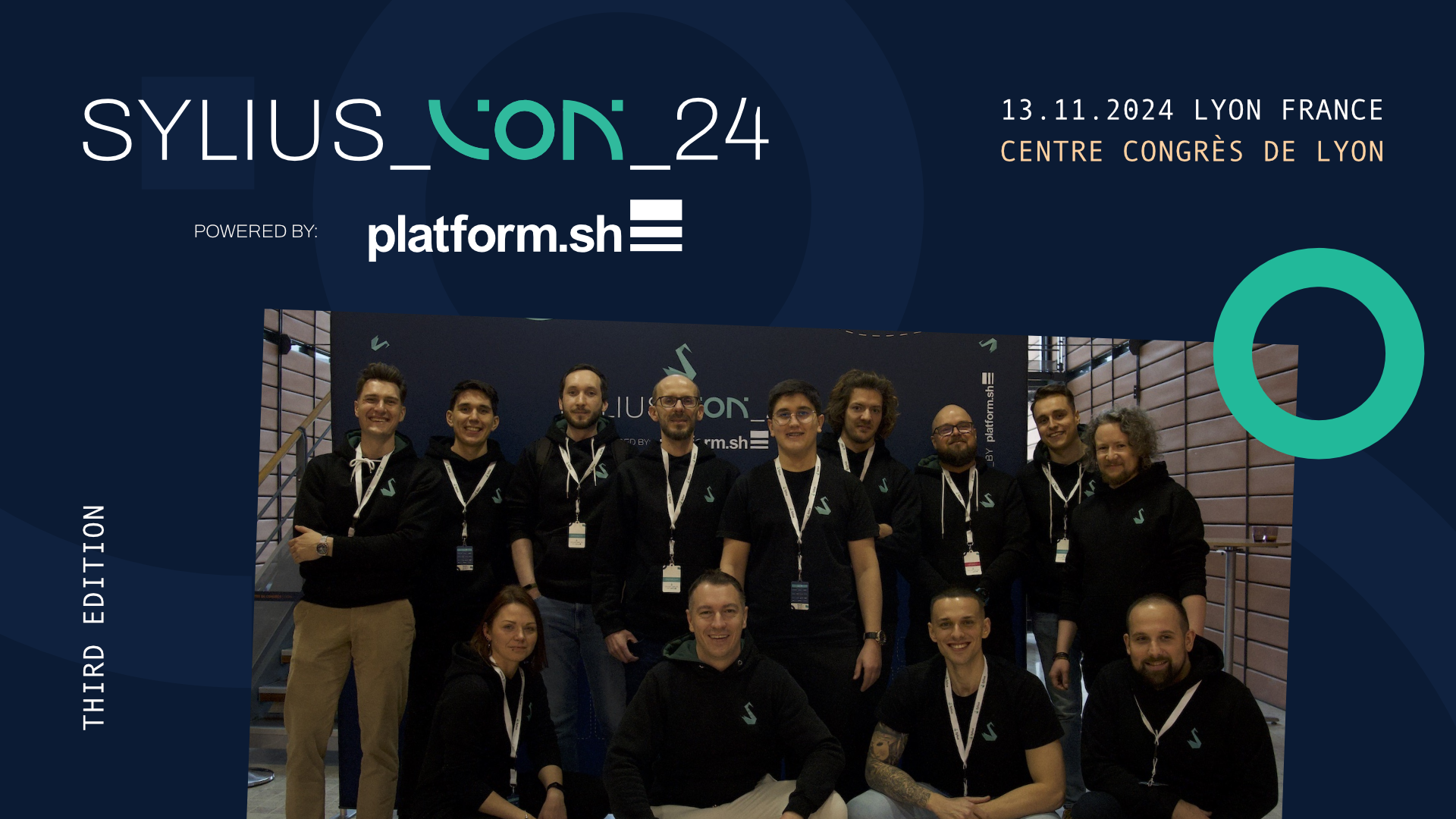
This year has been intense. From SyliusCon in Lyon to the PrestaShop acquisition, from crossing 10,000 live stores to welcoming new partners and watching diverse projects launch across Europe, the Sylius ecosystem kept moving forward.
We’re grateful to everyone who contributed, built, experimented, and trusted Sylius with their projects. Whether you wrote code, launched a store, shared knowledge, or simply stayed engaged with the community, you made this growth possible. 🫶
As we step into 2026, we’re excited about what’s ahead. The roadmap livestream on January 22nd will give you a clearer picture of where we’re heading, but one thing stays constant: Sylius remains committed to open-source values, technical excellence, and building tools that give businesses real control over their commerce platforms.
Thank you for being part of this journey. See you in 2026! 🦢