
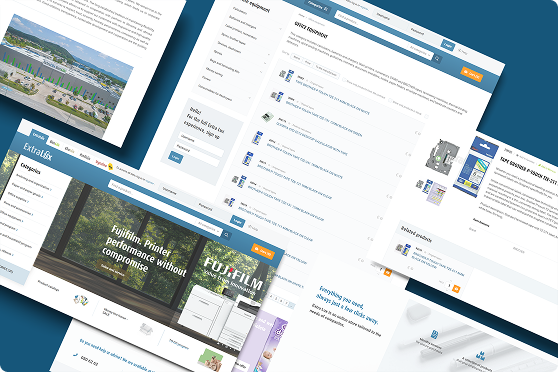
In the traditional office supply model, both sides deal with inefficiencies. Customers expect supplies to always be available, but often reorder only once stock runs out. For suppliers, this creates pressure around urgent requests and delivery planning. ExtraLux wanted to move beyond that model. Its new approach was based on consigned inventory, with supplies stored at customer locations, monitored over time, and replenished regularly. This required more than a standard B2B webshop.
The platform had to track inventory, support monthly consumption reporting, and automate invoicing based on actual usage, while still serving customers using a more traditional B2B purchasing flow.
ExtraLux and our Professional Solution Partner Creatim chose Sylius because the project required a platform flexible enough to support a non-standard commerce model.
Creatim first mapped the user flows needed for customers to manage their personalized office supply lists. A key part of the solution became a web application that allows customers to report monthly consumption, which then serves as the basis for automatic invoicing. The application was designed to be simple and easy to use, helping ensure adoption on the customer side. The system also alerts ExtraLux representatives when inventory should be replenished.
The development team built the solution on Sylius, using one platform to support both the traditional B2B online store and the dedicated Birolux application for distributed inventory management. This made it possible to combine standard purchasing processes with a more service-oriented inventory model from a single foundation.
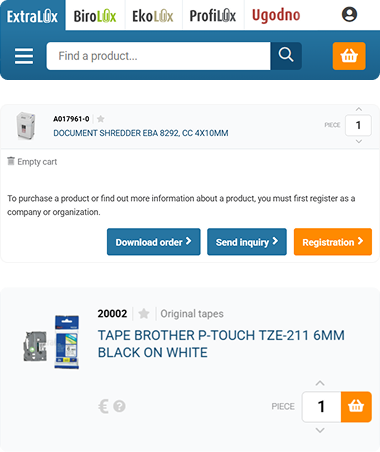
Customer-specific catalogs and pricing
Personalized promotions
Assisted-selling module
Distributed inventory management
Jointly managed by ExtraLux and its B2B customers
Deploy a high-performance search engine (Doofinder) with predictive results and advanced filtering.
Monthly consumption reporting for automatic invoicing
Alerts for ExtraLux representatives to restock inventory
The new platform gave ExtraLux a stronger operational model for managing B2B supply processes more efficiently.
Built on Sylius, the solution supported both a traditional webshop and a more advanced inventory-based service model within one maintainable system. Customers no longer needed to react only when supplies ran out, and ExtraLux gained a more structured way to manage replenishment and usage-based billing.
For customers, this meant better continuity and fewer shortages. For ExtraLux, it meant lower delivery costs and less pressure on customer service, since restocking could be planned in advance instead of being driven by scattered urgent requests.
The new model also strengthened ExtraLux’s position in tenders. With stock already available at customer locations, the company could offer an order-to-delivery model that was close to immediate.
Optimize inventory and delivery processes
Gain new customers through competitive delivery costs
Maintain a single view of customers, inventories, and orders
Drive brand recognition and reputation


 Sylius Plus


