

For years, Fortrade’s online store had been developed by an offshore programming team. Over time, communication barriers and development limitations made it harder to adapt the platform to changing business needs. As the business expanded, these issues began to represent a real operational risk.
The B2B store revamp became necessary. Fortrade needed a flexible solution that could reflect the specifics of its existing wholesale sales process while creating room for further optimization and UX improvements.
The requirements were shaped by the realities of furniture wholesale. Customers needed to order products in packaging quantities or their multiples, rather than in arbitrary units. The platform also had to calculate gross weight and volume in real time, helping partners plan deliveries more accurately.
Partial deliveries were another important part of the process. Some products might be in stock, others available in a few weeks, and others still pending procurement. The system therefore needed to calculate delivery timelines for individual items, so buyers could clearly understand when each part of the order would arrive.
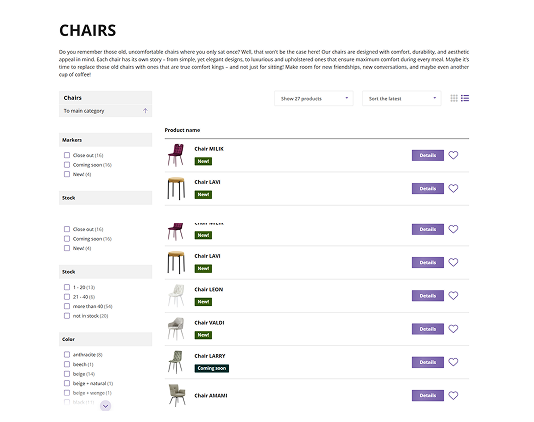
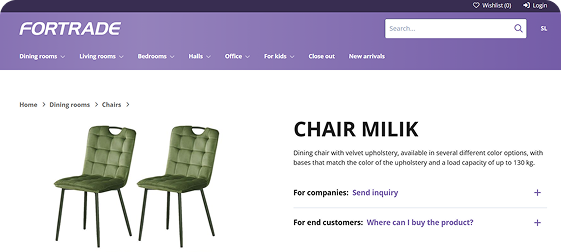
The platform also had to support more advanced role-based workflows. Different users within a partner organization needed different permissions. Some could view products only, some could access prices and stock information, and others could place orders. These distinctions had to be built directly into the purchasing process.On the operational side, Fortrade needed better support for internal teams as well. Web store managers had to be able to conduct data exports without technical knowledge, while the system also needed to flag risky buyers and warn about outstanding obligations. In addition, Fortrade relied on a data feed system that allowed partners to import product descriptions and stock information into their own sales and marketing channels.
To support this type of wholesale operation, Fortrade needed a platform flexible enough to reflect B2B-specific business rules without forcing them into a simplified B2C model.
Sylius was chosen because of its modular architecture and adaptability. It allowed Creatim to build the purchasing logic around the way Fortrade’s partners actually worked, while keeping the platform maintainable and open to future improvements.
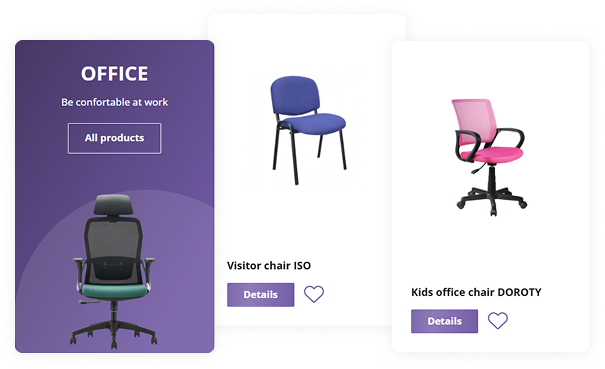
Real-time gross weight and volume calculations
API-first approach made this integration straightforward
Role-based permissions for procurement teams
Data exports accessible to non-technical store managers
Customizations without technical debt
The project also involved data migration and ERP integration, which added an important technical layer to the implementation. The new platform had to work reliably with Fortrade’s existing systems, ensuring smoother data flow across product information, stock levels, and order handling. Thanks to the platform’s flexibility, these integrations could be approached in a way that supported current operations while also giving the business a stronger foundation for future improvements.
The new platform gave Fortrade a stronger operational foundation for managing its wholesale business online.
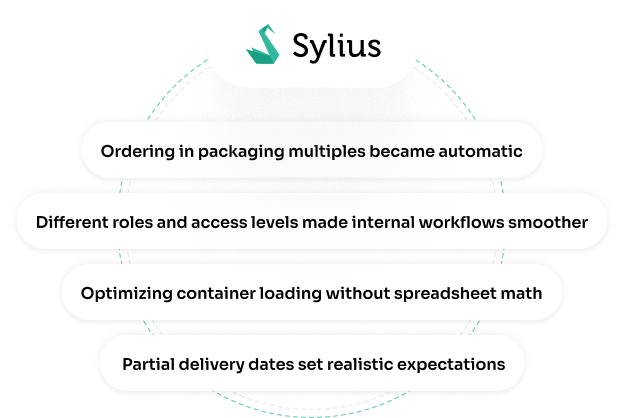
Built on Sylius, the solution made it possible to support complex B2B purchasing rules within one maintainable platform. Ordering in packaging multiples became automatic, real-time weight and volume calculations improved delivery planning, and partial delivery logic helped set clearer expectations for buyers.
Purchasing teams at partner companies also gained a structure better suited to the way they worked. Different roles and permissions made internal purchasing processes more organized, without relying on manual workarounds or shared access.
On the operational side, Fortrade’s team became less dependent on developers for routine data handling. By automating key processes and making important tasks more accessible to non-technical users, the platform reduced manual effort and gave the sales team more room to focus on business growth.


 Sylius Plus


